
Van Morrison
- irenenavia1
- Nov 2, 2025
- 6 min read
Updated: Dec 3, 2025
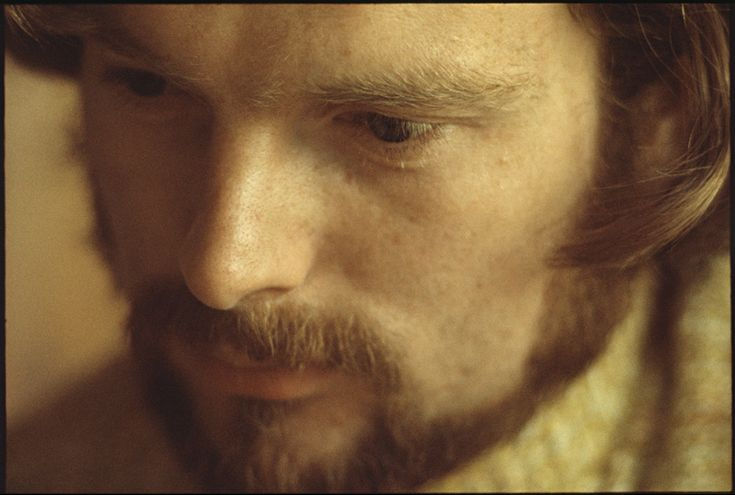
I was looking up Van Morrison interviews for this, and I have to say that one of the funniest things about Van the Man is the bizarre concoction of contradictions he represents. Maybe it’s because he was raised by an atheist father and Jehovah’s witness mother, but Morrison’s character is a little bit of everything: grouchy, mulish, and yet inventive; disdainful of inspirations and interpretations drawn from his music and yet open about his own influences; one would guess by his songs knowingly romantic, but apparently he hid in dustbins to jump at his crush as she walked by. Could even be called a modern Van Gogh, since now we can add inordinate demonstrations of love to “ginger”.
Except, as opposed to Van Gogh, Morrison has been greatly admired during his lifetime. Which is unsurprising, since his long list of extravagancies also includes “exceptionally good musician”. At times it might seem (it definitely does seem) that music is just a job to Morrison, but that’s hard to believe after hearing it. His interviewers certainly didn’t, even after he made faces like these whenever any question of underlying meaning was raised:

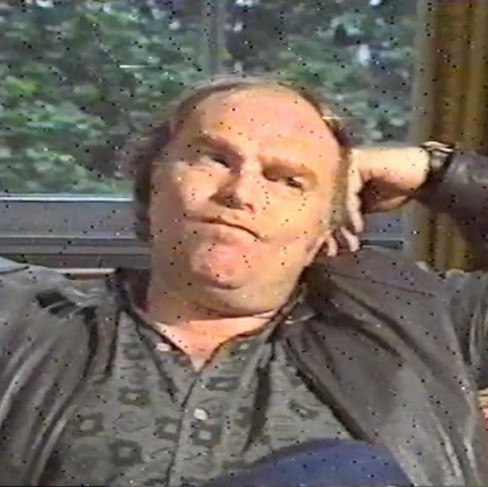


The thing is that Morrison’s willingness to intimate to us the emotions behind this music depends majorly on his mood, the time of day, and what he had for breakfast that morning. Like any good eccentric, Morrison is never consistent. His concerts, from what I’ve heard, are either amazing or completely careless. You get the feeling that he takes great pains to chase the controversy.
Which, honestly, is ok by me. I think that usually (emphasis on usually, which doesn’t mean always) the intention behind the music, or the person who wrote it, is secondary to the response it creates in you as a listener. That’s where we can talk about the “genius” of Van Morrison. Maybe “genius” is a word that gets tossed around too much, but I’m using it to mean anything both unique and good, not just one or the other. You can remember that going forward.
I think the unique part is easy to identify. Not in Morrison’s music exactly - even though he uses a blend of folk, jazz, gospel, rock n’ roll, etc. which is pretty rare, if not one of a kind. Hopefully in the next few years I’ll really look into music production and be able to describe how his use of the saxophone here or there adds such and such. That’s a work in progress.
But I think that beyond instrumentation, what makes Morrison’s music truly unique is his voice. I feel like I say the same thing for every artist I talk about lately, but genuinely Van Morrison’s voice - which isn’t pretty, smooth, or anything even remotely close to “that sounds nice” - is instrumental in making his music the fountain of emotion that it is. It strains whenever he tries to go too far over his range, which isn’t often. He sings over the music almost as if the music were one entity, and the singing was another, just working together on this song. And with a heavy Northern Irish accent. But somehow, like the dozens of contradictions that characterize Van Morrison, the contrast works.
Because the result is really, really good, which is the second box we wanted to tick there. Even though in the interviews I’ve watched Morrison seems to deter analysis as much as he can, I think at least the overall mood of his work is worth pointing out. At the end of the day, that’s basically what I’m recommending . So if you’ve never heard of Van Morrison music, what I can tell you is that it’s very sweet, in an unfiltered way. It seems aimed for fall or spring, periods of transition: it’s a strange mix of nostalgia and optimism, a look back and a look forward. It ends up right in the moment. I think that’s a good way to put it: while listening to Van Morrison, you’re dropped right into the moment. But since a moment is only very brief, you end up on the sides of it too. It’s like a kind of trance, where every instant passes by smoothly, and by the time the song is over it’s like a whole afternoon in three minutes.
I don’t think that was a stellar explanation, but give me some grace for now, since it’s my very first article. Don’t worry - we’re moving in a more concrete direction, and a more tangible mood that settles over most of the Van Morrison music I listen to (the more recent ones I’m pretty sure are songs protesting the Covid lockdown - like I said, he likes to chase controversy.) But the older ones, which came out pretty early in his career, are charged with heavy inspiration - the melancholic, alternative influences of Northern Ireland and the somewhat reminiscent Boston.
Although not my personal favorite, the most celebrated and well-known album of Morrison’s is by far Astral Weeks. He wrote it in a small apartment in Cambridge while escaping his New York label. Maybe Boston’s large Northern Irish population reminded him of home, because Astral Weeks is plagued with references to Belfast, childhood, and the looming presence of what could have been. It’s also a break from the R&B that he had done with Them, the band he had been a frontman of for several years, or the pop hit Brown Eyed Girl, which is still the reason his name is recognizable in popular culture. His native Northern Ireland is depicted, through light and loose jazzy sounds that demonstrate the clear influence of 1968 Boston, like some sort of mystic, wondrous place. Even Boston itself, in the inscription on the back of the album, which reads:
“I saw you coming from the Cape, way from Hyannis Port all the way,
When I got back it was like a dream come true
I saw you coming from Cambridgeport with my poetry and jazz,
Knew you had the blues, saw you coming from across the river…”
is lit in a picturesque, enchanting way. That’s kind of what I think of when I think of Van Morrison. Just in case you were wondering, my personal all time favorite album of his is Moondance, which although written the year after Astral Weeks, after he had already moved back to New York, I personally think carries a lot of that Boston feel too. If he didn’t mean it to, then it’s pretty crazy how well it fits with a fall afternoon feeding the ducks at the Boston Commons. I haven’t seen that many people mentioning it, but I’m confident that Into the Mystic (one of my all around favorites) isn’t only a reference to his fascination with mysticism, but also the Mystic River Bridge. I don’t know what came first, really - my idea of Boston or my idea of Van Morrison. But if you’re a fan of either, then you’re probably a fan of both. If you’re a fan of long walks and a cool wind, then you’re probably a Van Morrison fan. If you’re a fan of folk and nostalgia, then you’re probably a Van Morrison fan. Etc. Just check him out!
Anyways, that’s it for today. I don’t know if the rest of the posts will be based on vibes, or if I’ll actually try to share something with more of a consistency. But if you weren’t a Van Morrison fan and you are now, after listening to him, I’m satisfied. If you already were a fan, then you probably didn’t get as much from this - but hopefully you enjoyed seeing someone else’s perspective on it, and as always I’m always, always, super excited to hear any opinions you might have!
I leave my recs down here:
Top 15 tracks:
1. Into the Mystic
2. Did Ye Get Healed
3. Brown-eyed girl
4. It’s All Over Now, Baby Blue (technically a Them song, but definitely worth a listen)
5. Here Comes the Night
6. Sweet Thing
7. Tupelo Honey
8. Moondance
9. And It Stoned Me
10. Come Running
11. Caravan
12. Slim Slow Slider
13. Wild Night
14. Have I Told You Lately
15. Crazy Love
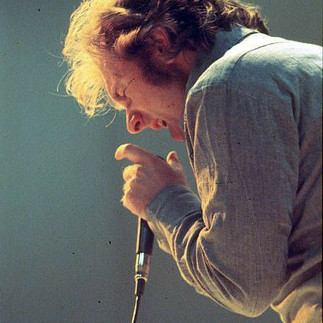
and this really great 16 min. outtake that’s only on YouTube - in case you're a big big fan:



Comments